

GABA Tea – Real Tea for the Evening?
A tea friend from Bali sent me some GABA teas from one of his trusted tea merchants two weeks ago. He was so enthusiastic about them that I became curious myself.
I had heard about GABA tea many times before but had never really looked into it. Whenever people talked about its effects—balancing, relaxing, ideal for the evening—I had mentally filed it away in the herbal tea category.
The thing is, I rarely drink caffeinated beverages after about 5 p.m. I’m quite sensitive to caffeine and usually switch to herbal teas in the evening. While I do enjoy them, the truth is: I would much rather be drinking real tea.
So I decided to give GABA tea a try.
Is GABA a Type of Tea?
Many people assume that GABA tea is its own category of tea. In reality, it is a special processing method.
Tea leaves—most commonly Oolong, green, or black tea—are fermented in an oxygen-free environment. This process increases the concentration of gamma-aminobutyric acid (GABA), an amino acid known for its calming effect on the nervous system.
Botanically, the tea remains the same; what changes is the way it is processed.
Lightly oxidized GABA Oolong
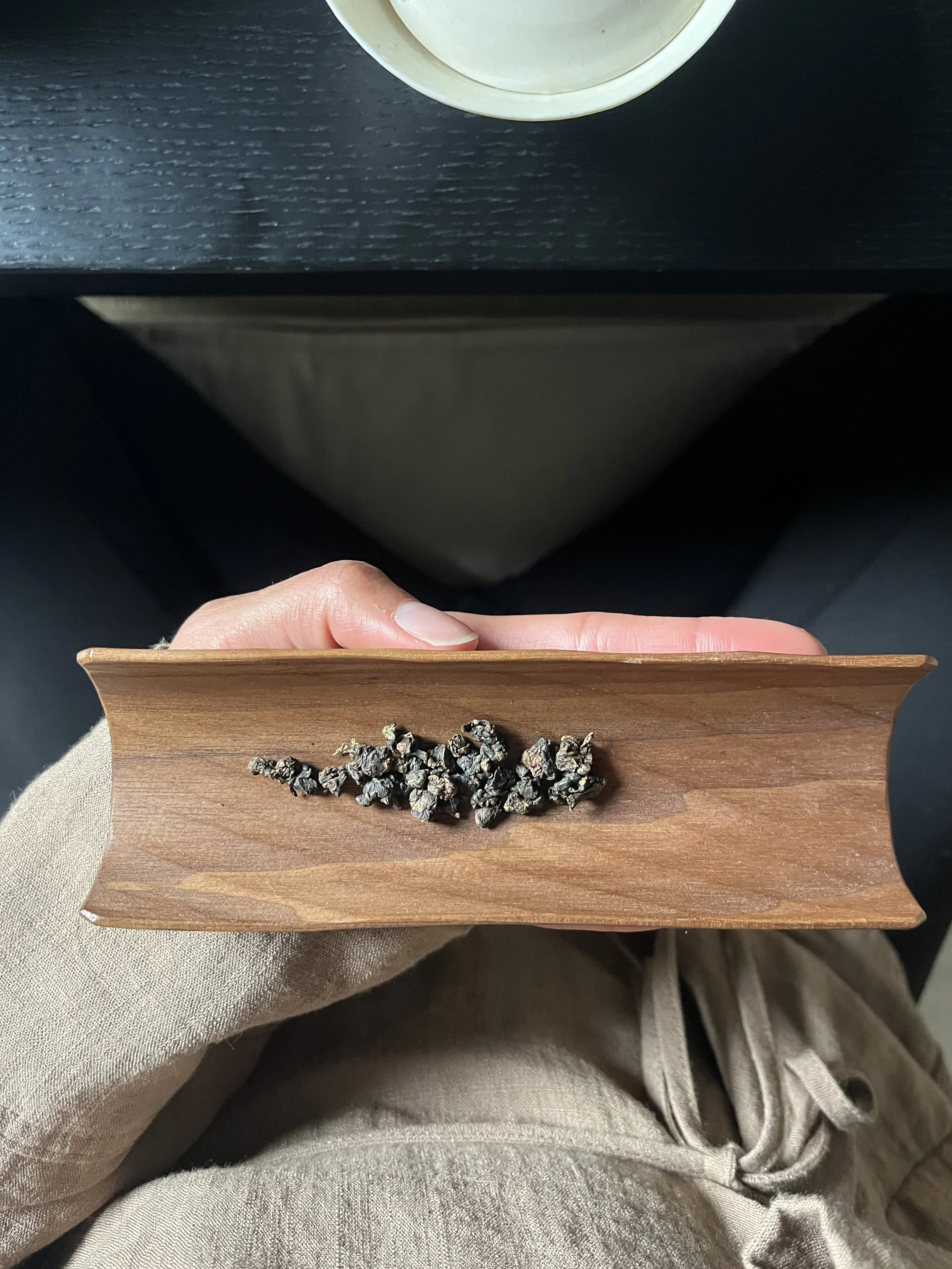
lightly oxidized GABA Oolong
What Does GABA Tea Taste Like?
Since GABA tea can be produced from different types of tea, there is no single flavor profile.
I tried two Taiwanese GABA Oolongs: one lightly oxidized and one more heavily oxidized.
In the first infusions, both displayed a pronounced honey note, which gradually gave way to the characteristic flavors of each tea.
The lightly oxidized Oolong was floral and mineral, while the more heavily oxidized version—along with a red (black) GABA tea—offered nuttier and maltier notes.
What particularly surprised me in the lightly oxidized tea was a delicate musk-like aroma that I had not expected.
I prepared both teas once in a Gaiwan and once in my Zisha teapot. While each brewing method revealed slightly different nuances, the overall character remained the same.
Prepared in my Taiwanese porcelain Gaiwan
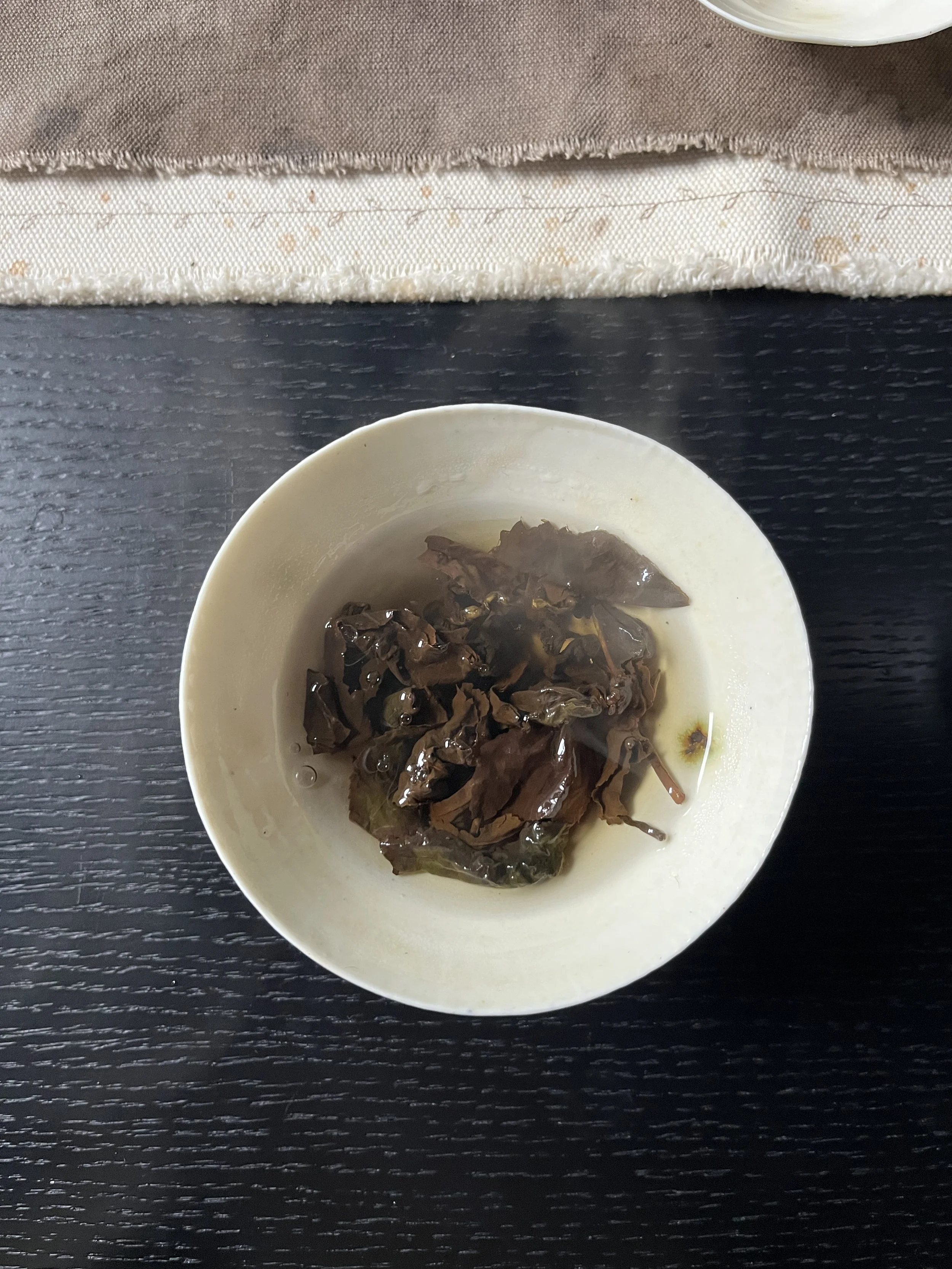
Prepared in my Porcelain Taiwan
Does GABA Tea Contain Caffeine?
Yes. Depending on the base tea used, GABA tea does contain caffeine.
However, the caffeine tends to feel less pronounced due to the high GABA content.
The caffeine level can also be managed quite effectively through brewing time and water temperature. The shorter the infusion, the less caffeine is extracted.
The good news is that approximately 60–70% of the GABA content is released during the first two infusions.
As a result, relatively little caffeine—but a significant amount of GABA—ends up in the cup.
Heavily oxidized GABA Oolong prepared in my Zisha teapot
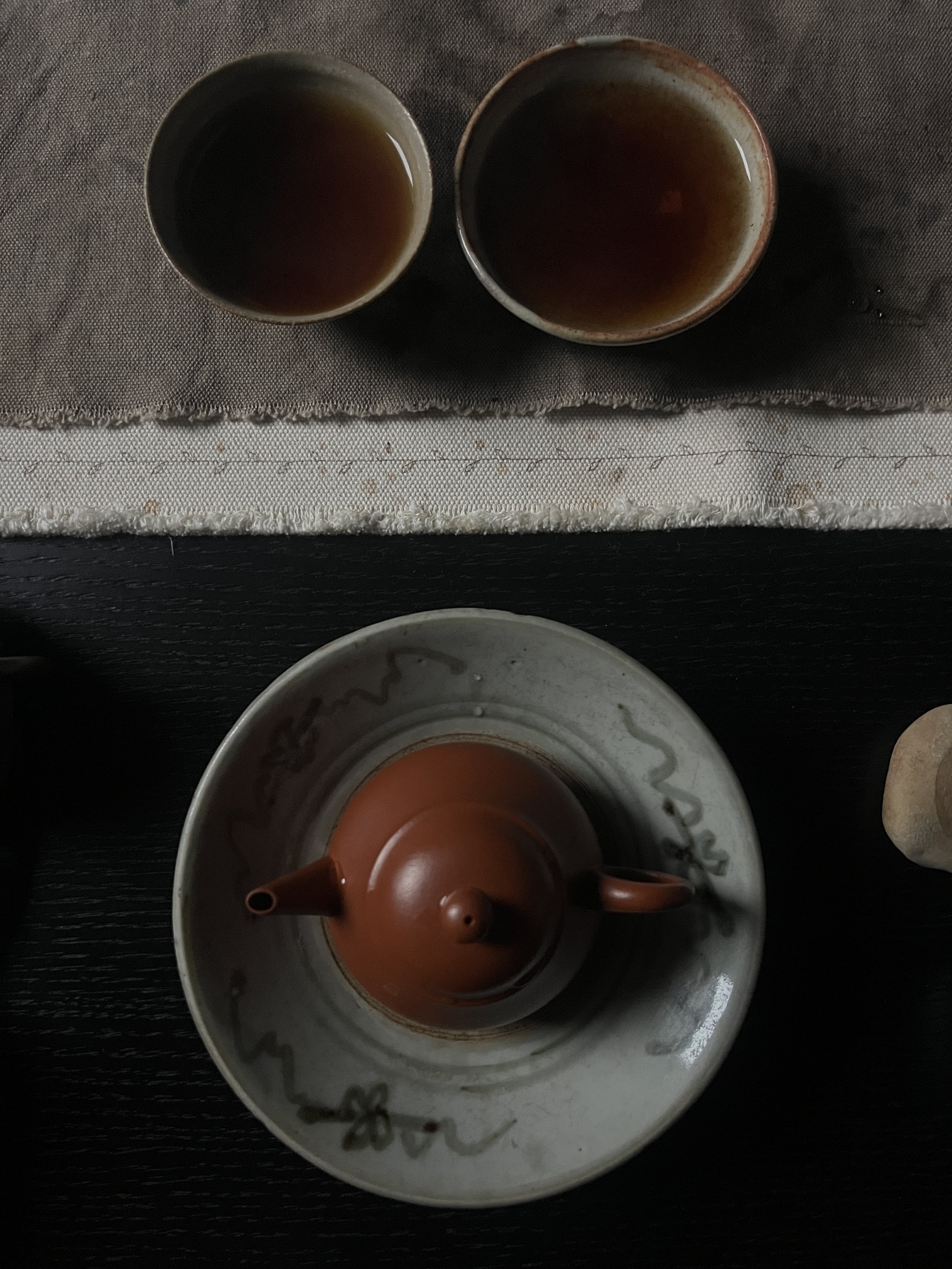
heavy oxidized GABA Oolong prepared in my Zisha.
What Are the Effects of GABA Tea?
GABA is known for its balancing, calming, and relaxing effects—and as a self-confessed caffeine lightweight, I can confirm that impression.
The pleasant, clear focus I associate with Oolong tea is still there.
But without the internal buzz or restlessness.
Nowadays, almost every larger or more specialized tea merchant carries GABA tea in their assortment.
The two teas described here are available upon request.